
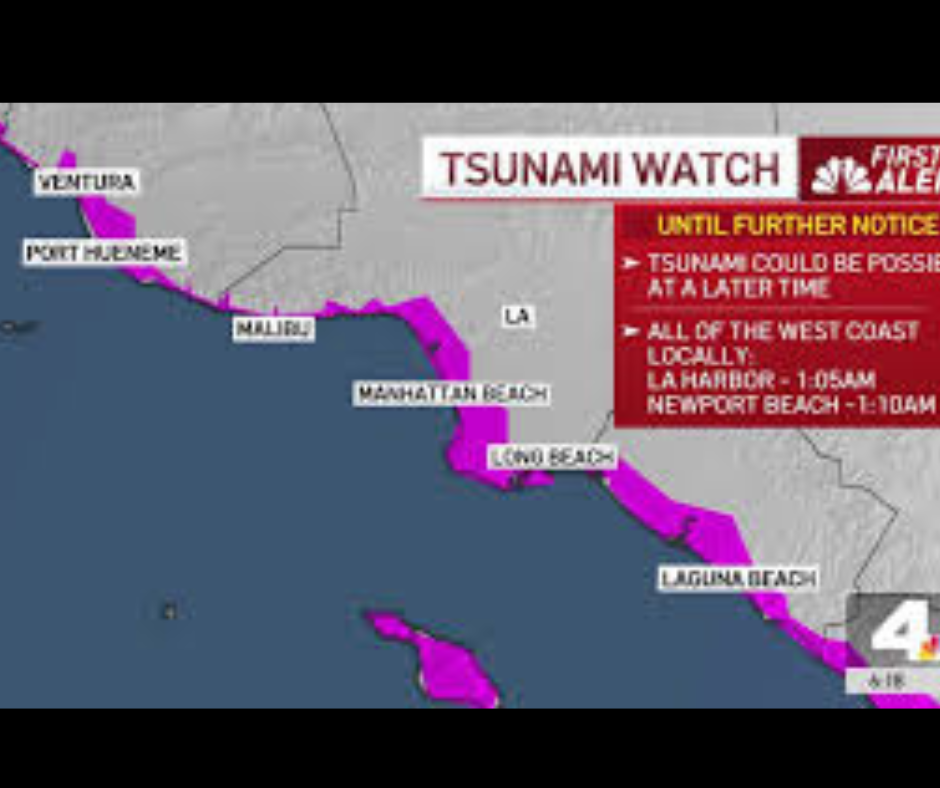
Tsunami Warning Issued for California Coast: What You Need to Know
California’s coastline is on high alert today after a tsunami warning was issued. The warning follows a strong undersea earthquake that struck near the Pacific Ocean
. Emergency services are urging residents and visitors to act fast and stay safe.
What Triggered the Warning?
The tsunami alert came shortly after a magnitude 7.9 earthquake hit off the coast of Alaska. The U.S. National Tsunami Warning Center confirmed that the quake had the potential to create dangerous waves. Officials say the first waves could reach parts of California within hours.
Which Areas Are at Risk?
The warning covers most of California’s coastal cities. Areas at higher risk include:
-
Los Angeles County beaches
-
San Diego coastline
-
San Francisco Bay Area shores
-
Santa Barbara and Ventura counties
Residents in these areas should avoid beaches, harbors, and marinas. Even strong swimmers are not safe when tsunami waves arrive.
What Officials Are Saying
The California Office of Emergency Services (Cal OES) is advising people to move to higher ground immediately. They are also reminding the public that tsunamis are not like normal waves. The water can rise quickly and with great force.
Emergency alerts have been sent to mobile phones in affected areas. Local authorities are setting up temporary shelters for people who need a safe place to stay.
How to Stay Safe During a Tsunami Warning
If you are in a tsunami warning zone, follow these tips:
-
Move inland or to higher ground immediately.
-
Do not wait for an official evacuation order if you are near the shore and feel strong shaking.
-
Stay away from beaches and waterfront areas.
-
Listen to local news, radio, or trusted social media sources for updates.
-
Avoid driving near the coast unless evacuating. Roads may be crowded.
Even if the waves seem small at first, larger ones can follow. Stay alert until officials say it is safe.
Past Tsunamis in California
California has faced tsunami threats before. In 2011, after the Japan earthquake, waves damaged harbors in Crescent City and Santa Cruz. That event was a reminder of how far-reaching a tsunami’s impact can be.
Scientists say California’s location along the Pacific “Ring of Fire” means it will always face some risk. Preparation is the best defense.
What Happens After the First Wave?
Many people believe the danger ends once the first wave passes. This is a dangerous myth. Tsunamis can produce multiple waves over several hours. Sometimes, the largest wave comes much later.
Officials warn residents to stay away from the shore for at least 24 hours or until they lift the warning.
Emergency Services on High Alert
Police, firefighters, and the Coast Guard are all on standby. Rescue boats and helicopters are ready if needed. Hospitals in coastal areas are preparing for possible injuries.
The U.S. Coast Guard has also warned boat owners to secure their vessels or move them to deeper water.
Why Tsunami Warnings Matter
Tsunamis are rare but deadly. They can destroy homes, flood roads, and sweep away people and vehicles. A few minutes of preparation can save lives. This is why officials issue warnings even when the risk is uncertain.
Being ready means having an emergency plan, knowing your evacuation route, and keeping a supply kit at home.
Final Word
California’s tsunami warning is a serious reminder of the power of nature. While not every warning leads to disaster, it’s always better to be safe than sorry.
If you are in a risk zone, leave the coast immediately. Listen to authorities. Protect your family and your neighbors. Safety must come first.
Meta Description (SEO):
Tsunami warning issued for California after a strong Pacific earthquake. Find out which areas are at risk, safety tips, and official evacuation advice.
If you’d like, I can now create a click-worthy headline and SEO keywords list for this blog so it ranks higher in Google search.
Do you want me to do that?